
 For partners
4 best universities in Lisbon 2026
-
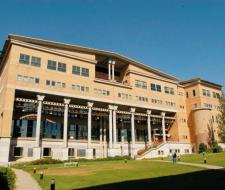 from 6035.00 $ / year
 -
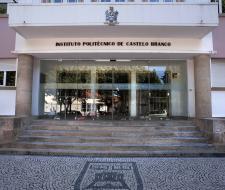
-
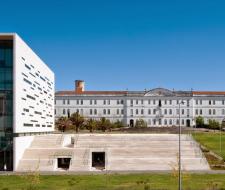 #1 in Best Global Universities in Portugal
PortugalLisbonCurrently watching: 1
#1 in Best Global Universities in Portugal
PortugalLisbonCurrently watching: 1 -
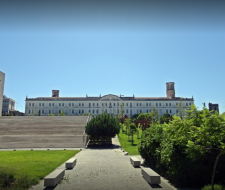 #4 in Best Global Universities in Portugal
PortugalLisbonCurrently watching: 1from 3000.00 € / year
#4 in Best Global Universities in Portugal
PortugalLisbonCurrently watching: 1from 3000.00 € / year
-

-
-
-
 Individual lessons with the teacher are developed for each student.
PortugalLisbon
Individual lessons with the teacher are developed for each student.
PortugalLisbon -

-
-
 ranked 7th worldwide (first in Switzerland)
SwitzerlandZürich
ranked 7th worldwide (first in Switzerland)
SwitzerlandZürich -
Portugal, a country with a rich history and culture, boasts a well-developed higher education system that goes back centuries. The symbol of this system is, of course, the Universidade de Coimbra (University of Coimbra), the oldest university in Portugal and one of the oldest in Europe. For centuries, it has attracted talented young people from all over the continent, becoming a symbol of prestige and high-quality education.
Modern Portuguese universities are not just keepers of traditions, but also dynamically developing centers of scientific research and innovation. Every year, tens of thousands of students from around the world choose Portugal for obtaining higher education, attracted not only by the high quality of education and relatively low cost, but also by the special, warm and friendly atmosphere prevailing on campuses.

What firstly should be considered when choosing a university? Subjects, employer value, percentage of employment in the first year after graduation?
It depends on the student - everyone determines the most important criteria for himself. I would advise you to take several rankings and compare them with each other, plus take into account the cost of the course, the location of the university and its scale, the percentage of graduates' employment. See where graduates continue their studies or where they go to work.
Alternative destinations
Universities in Lisbon: key features
Portugal's higher education system, aligned with the Bologna Process, is structured around three main cycles: the Bachelor’s, Master’s, and Doctorate degrees. Each stage has its own specific requirements, but all maintain a high level of academic rigor and an emphasis on practical application.
Lisbon’s universities, known for their wide range of programs across diverse fields, are particularly popular with international students. Those considering applying should be aware of several key points:
-
Admission requirements for international students can vary significantly between institutions.
-
Most programs are designed for full-time study. Part-time evening courses are less common and are typically only offered at the Master’s level.
-
Students are permitted to work part-time for up to 20 hours per week during their studies, allowing for a careful balance between work and academics.
-
Assessment methods are diverse, ranging from traditional written and oral exams to more modern approaches like tests, projects, and lab work.
-
While Portuguese is the primary language of instruction, a growing number of programs—especially at the Master’s and Doctoral levels, and particularly in private universities—are taught in English, making Portuguese higher education more accessible.
In Lisbon, higher education is offered through two types of institutions: universities and polytechnic institutes. Universities focus on theoretical and research-oriented fields in the sciences and humanities, while polytechnics provide practical, career-focused training for professionals like engineers and technologists. While it is possible to transfer between the two systems, it typically requires passing a series of exams.
After a three-year program, a polytechnic graduate earns a Bachelor’s degree. They may then choose to complete an additional one- to two-year Licenciatura course, which grants access to Master’s programs.
The university path is similar: a three-year Bachelor’s degree is followed by a one-year Licenciatura. Only with a Licenciatura or equivalent can a student apply for a Master’s program, which is a prerequisite for doctoral studies (PhD).
Portugal also awards a unique post-doctoral academic title called Agregação, granted to doctoral holders who demonstrate exceptional achievement in independent research and teaching.
Studying in Lisbon offers international students several advantages:
-
A degree that facilitates professional practice and employment across Europe.
-
The freedom to travel within the EU during studies.
-
A six-month post-graduation period to seek employment in Portugal.
-
Finally, Portuguese universities are regarded as some of the least corrupt in Europe, though securing a scholarship can be challenging for non-EU citizens.
State and private universities in Lisbon
Higher education institutions in Lisbon are classified as public and private, the latter belonging to both individuals and organizations. This category also includes universities owned by the Catholic Church.
Both comprehensive universities and polytechnic institutes can be either commercial or public. All military and police academies are exclusively state-run. Public institutions are typically characterized by stricter control over tuition fees and the number of students admitted.
Public universities in Lisbon have a rich history dating back to the Middle Ages. Similar to other European universities of that time, they were founded by monarchs under the control of the Catholic Church.
The spread of private higher education institutions in Lisbon began after 1974; these institutions primarily attract students studying literature, acting, and other creative fields.
Top universities in Lisbon are:
- Catholic University of Portugal,
- Polytechnic Institute of Lisbon,
- University of Lisbon.
Admission to universities in Lisbon
The admission process to universities in Lisbon is based on the principle of competitive selection. Universities annually publish data on the number of available places and admission requirements, which may differ for citizens of European Union countries and non-EU citizens.
The main requirements for entering universities in Lisbon include:
- A certificate of complete secondary education obtained under A-level or International Baccalaureate (IB) programs designed for the 16-18 age group.
- Applicants who are not native speakers of Portuguese must demonstrate proficiency at level B2 or higher; in some cases, admission is allowed with level B1, but with an obligation to achieve level B2 during the course of study.
- Similar language requirements also apply to programs in English.
- The admissions committee may require an essay explaining the choice of this university from the applicant.
- In some cases, a remote interview is conducted.
Tuition fees, scholarships and grants
Tuition is formally free at state universities in Lisbon, however students are required to pay annual fees — usually between €570 and €920 euros.
The following individuals are eligible for free higher education in Portugal:
- Citizens of European Union member states,
- Applicants whose spouses or parents are citizens of the EU,
- Foreign nationals who have legally resided in Portugal for more than two years.
It is important to note that free tuition is only available on programs conducted in Portuguese, all programs in English are paid.
The cost of tuition at universities in Lisbon on a commercial basis ranges from €3000 to €12,500 per year. The most expensive are English-language programs, often offering the opportunity to obtain a double degree.
The state and universities of Lisbon provide grants and scholarships for students, for example:
- Grants from the Directorate-General for Higher Education (DGES) to cover tuition costs in case of financial need,
- From the Foundation for Science and Technology (FCT) for doctoral research and scientific work,
- Material support from universities based on academic merit or financial necessity.
The Erasmus program is popular in Portugal, funding joint master's programs and study exchanges. Information about grants is also available on the Ploteus portal, managed by the European Commission.
Top 14 best universities in Switzerland 2026
| 1 | Glion Institute of Higher Education Switzerland |
| 2 | Les Roches International School Montana |
| 3 | César Ritz Colleges Switzerland |
| 4 | IHTTI School of Hotel Management |
| 5 | Ecole Hoteliere de Lausanne |
| 6 | Geneva Business School |
| 7 | HIM Hotel Institute Montreux |
| 8 | Swiss Hotel Management School |
| 9 | Webster University Geneva |
| 10 | Business and Hotel Management School |
| 11 | Luzern IMI |
| 12 | Swiss Hotel Management School (SHMS) Caux |
| 13 | International University in Geneva |
| 14 | Culinary Arts Academy Switzerland |
Top 10 best universities in Netherlands 2026
Top 35 best universities and colleges in Canada 2026
| 1 | University of Toronto |
| 2 | McGill University |
| 3 | University of British Columbia |
| 4 | University of Alberta |
| 5 | Simon Fraser University |
| 6 | Montreal University |
| 7 | University of Windsor |
| 8 | York University |
| 9 | University of Guelph |
| 10 | McMaster University |
| 11 | University of Manitoba |
| 12 | University of Waterloo |
| 13 | Royal Roads University |
| 14 | Vancouver Film School |
| 15 | Kwantlen Polytechnic University |
| 16 | University of Calgary |
| 17 | Dalhousie University |
| 18 | Fanshawe College |
| 19 | University of Ottawa |
| 20 | Laval University |
| 21 | Sheridan College |
| 22 | University of Regina |
| 23 | Brock University |
| 24 | Thompson Rivers University |
| 25 | Humber College |
| 26 | Vancouver Island University |
| 27 | Mohawk College |
| 28 | Centennial College Toronto |
| 29 | Niagara College |
| 30 | Capilano University |
| 31 | Seneca College |
| 32 | Algoma University |
| 33 | Saint Clair College |
| 34 | Douglas College |
| 35 | LaSalle College |